No products in the cart.
For orders from 1500 UAH – FREE DELIVERY in UKRAINE // For orders from 3000 UAH – FREE DELIVERY + GIFT


Cart

- 38 (098)4778882 Telegram/Viber
- 38 (093)4778882 Telegram/Viber
- 38 (095)4778882
- meeteora.sales@gmail.com
- Showroom: Ukraine, 04071, Kyiv, Kostiantynivska str., 4
- 38 (097)4778882 Partnership Development Manager
© 2023-2026 Nikk Mole Exclusive cosmetics store in Ukraine
Eyebrow shampoos
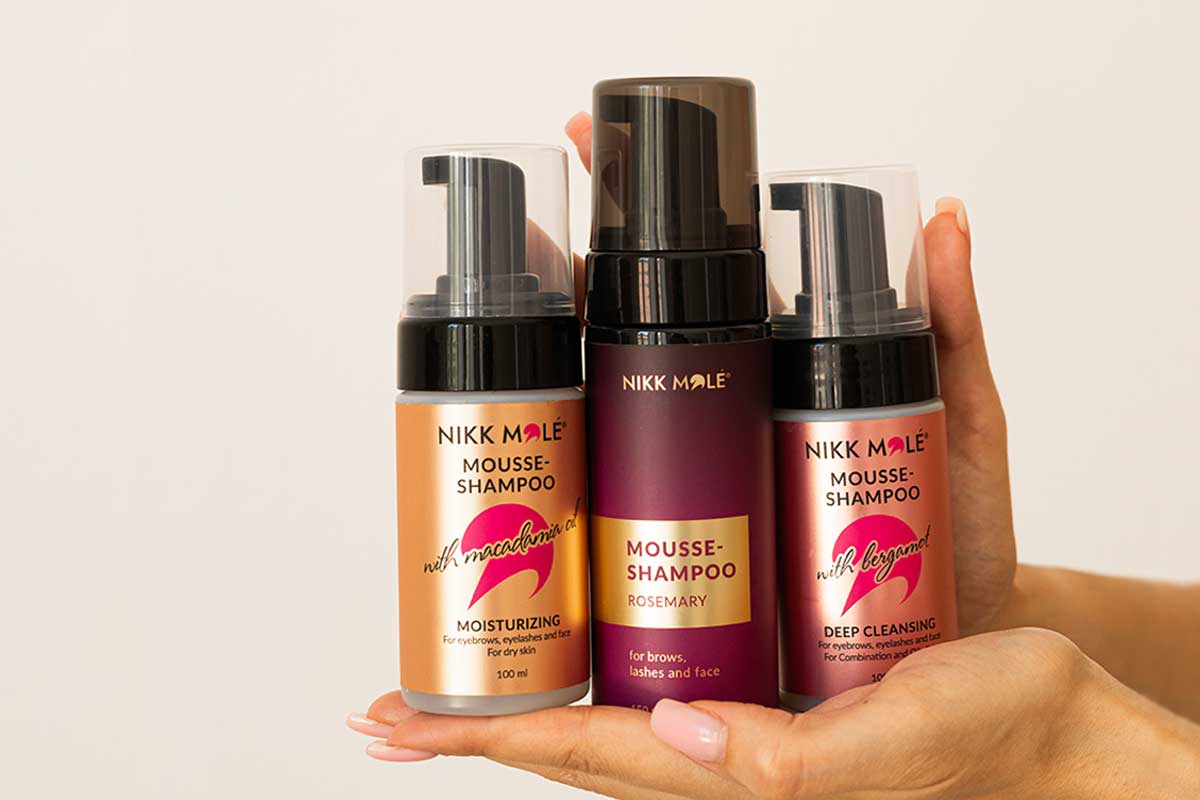
Eyebrow shampoos
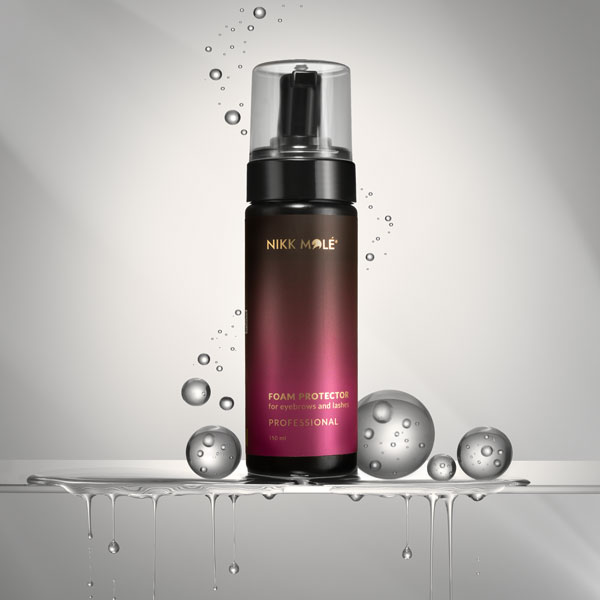
For almost every brow master or lash maker, work with a client begins with cleansing. And for this purpose, masters use various cleansers: eyebrow shampoos, foams. Today, these types of products are designed and aimed at ensuring hygiene and cleanliness of eyebrows, eyelashes, and skin, as well as preparing eyebrows and eyelashes for various procedures.
Let’s learn about the ingredients of shampoo and how it cleanses hairs and skin.
Shampoos are cosmetic products, usually in liquid form, that are applied to hairs and skin to cleanse them. They contain ingredients that bind to dirt, oil and particles on the hair in a special way and remove them when you rinse your hair.
How does it work?
Shampoos contain surfactants (also known as surfactants), which have hydrophilic (water-loving) heads and hydrophobic (water-hating) tails: one side of this molecule sticks to dirt and the other is attracted to water. Therefore, surfactants surround the dirt particles and stick to the water during rinsing, taking all the dirt particles with them.
What detergents are in the shampoo?
- Synthetic detergents: remove dirt, make-up, sebum and skin flakes from hair and skin.
- Conditioners: make hair soft and smooth, relieve electrostatic stress.
- Sequestering agents: prevent the formation of soap suds on the hair.
- Preservatives: prevent microbial and fungal contamination of the shampoo.
- Special additives/active ingredients: moisturising, regenerating, reducing the aggressive effect of the substance on the hair and skin structure.
- Thickening agents: substances that can thicken the shampoo, if necessary, but, for example, foaming shampoos, mousses are not thickened.
- Clouding agents and dyes: added to make the shampoo opaque or to add colour for aesthetic reasons.
- Fragrances: added to give the shampoo the desired smell.
When we look closely at this list, it becomes clear that synthetic detergents are what actually do the main work, while thickeners, clouding agents and fragrances do not affect the cleansing effectiveness of the shampoo.
What active surfactants are used in shampoos?
Commonly used anionic surfactants with good cleansing and foaming properties include sodium lauryl sulfate, sodium laureth sulfate and ammonium laureth sulfate; however, they can cause skin irritation and are usually used in combination with non-ionic surfactants, which are milder.
Popular posts
11.10.2024
17.09.2024
14.06.2024

© 2023-2026 Nikk Mole Exclusive cosmetics store in Ukraine